
What I'm Reading
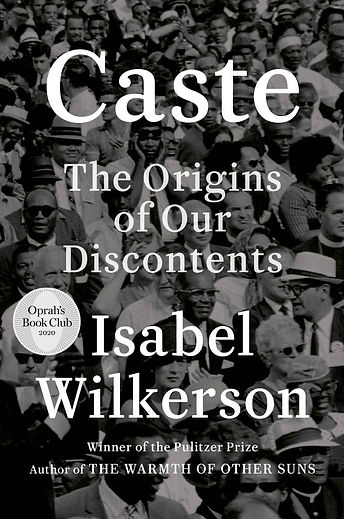
In this brilliant book, Isabel Wilkerson gives us a masterful portrait of an unseen phenomenon in America as she explores, through an immersive, deeply researched, and beautifully written narrative and stories about real people, how America today and throughout its history has been shaped by a hidden caste system, a rigid hierarchy of human rankings.

Heather McGhee’s specialty is the American economy—and the mystery of why it so often fails the American public. From the financial crisis of 2008 to rising student debt to collapsing public infrastructure, she found a root problem: racism in our politics and policymaking. But not just in the most obvious indignities for people of color. Racism has costs for white people, too. It is the common denominator of our most vexing public problems, the core dysfunction of our democracy and constitutive of the spiritual and moral crises that grip us all. But how did this happen? And is there a way out?

Flor has a gift: she can predict, to the day, when someone will die. So when she decides she wants a living wake—a party to bring her family and community together to celebrate the long life she’s led—her sisters are surprised. Has Flor foreseen her own death, or someone else’s? Does she have other motives? She refuses to tell her sisters, Matilde, Pastora, and Camila.

Yetu holds the memories for her people - water-dwelling descendants of pregnant African slave women thrown overboard by slave owners - who live idyllic lives in the deep. Their past, too traumatic to be remembered regularly, is forgotten by everyone, save one - the historian. This demanding role has been bestowed on Yetu.

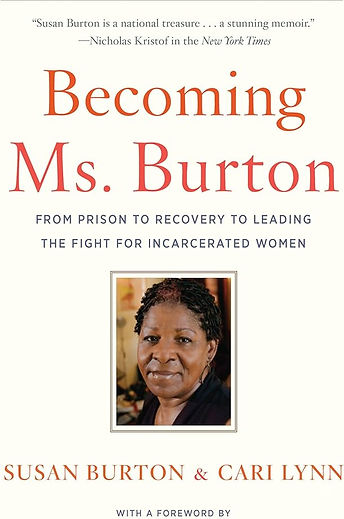
After a childhood of immense pain, poverty, and abuse in Los Angeles, the tragic loss of her son led her into addiction, which in turn led to arrests and incarceration. During the War on Drugs, Burton was arrested and would cycle in and out of prison for more than fifteen years. When, by chance, she finally received treatment, her political awakening began and she became a powerful advocate for "a more humane justice system guided by compassion and dignity" (Booklist, starred review). Her award-winning organization, A New Way of Life, has transformed the lives of more than one thousand formerly incarcerated women and is an international model for a less punitive and more effective approach to rehabilitation and reentry.
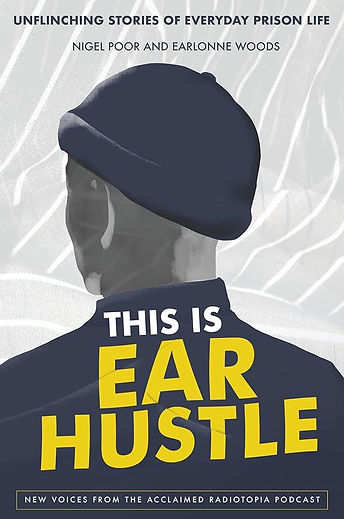
When Nigel Poor and Earlonne Woods met, Nigel was a photography professor volunteering with the Prison University Project and Earlonne was serving thirty-one years to life at California’s San Quentin State Prison. Initially drawn to each other by their shared interest in storytelling, neither had podcast production experience when they decided to enter Radiotopia’s contest for new shows . . . and won.

There is perhaps no crime more disturbing than the abuse of a child—and no court cases as upsetting as those in which juveniles who have faced abuse are tried for fighting back. In this gripping memoir Sara Kruzan, a survivor of childhood abuse and sex trafficking, tells the honest, disturbing, and ultimately empowering story of her journey from abuse to incarceration without parole for killing her abuser to finally gaining her liberation.

When global climate change and economic crises lead to social chaos in the early 2020s, California becomes full of dangers, from pervasive water shortage to masses of vagabonds who will do anything to live to see another day. Fifteen-year-old Lauren Olamina lives inside a gated community with her preacher father, family, and neighbors, sheltered from the surrounding anarchy. In a society where any vulnerability is a risk, she suffers from hyperempathy, a debilitating sensitivity to others' emotions.
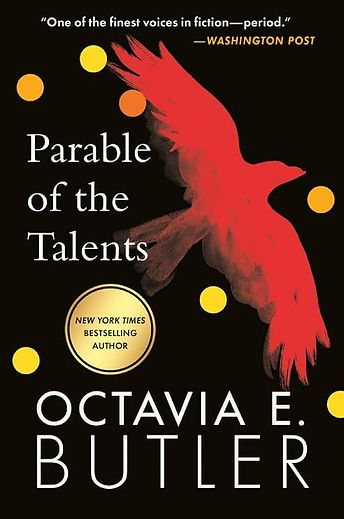
In 2032, Lauren Olamina has survived the destruction of her home and family, and realized her vision of a peaceful community in northern California based on her newly founded faith, Earthseed. The fledgling community provides refuge for outcasts facing persecution after the election of an ultra-conservative president who vows to "make America great again." In an increasingly divided and dangerous nation, Lauren's subversive colony--a minority religious faction led by a young black woman--becomes a target for President Jarret's reign of terror and oppression.


In her brand-new collection, Phoebe shares stories that will make you laugh, but also plenty that will hit you in the heart, inspire a little bit of rage, and maybe a lot of action. That means sharing her perspective on performative allyship, white guilt, and what happens when white people take up space in cultural movements; exploring what it’s like to be a woman who doesn’t want kids living in a society where motherhood is the crowning achievement of a straight, cis woman’s life; and how the dire state of mental health in America means that taking care of one’s mental health—aka “self-care”—usually requires disposable money.
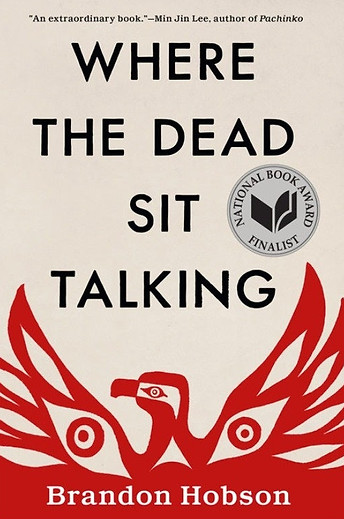
With his single mother in jail, Sequoyah, a fifteen-year-old Cherokee boy, is placed in foster care with the Troutt family. Literally and figuratively scarred by his mother’s years of substance abuse, Sequoyah keeps mostly to himself, living with his emotions pressed deep below the surface. At least until he meets seventeen-year-old Rosemary, a troubled artist who also lives with the family.
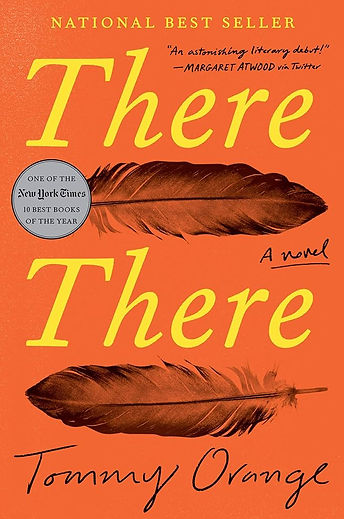
Among them is Jacquie Red Feather, newly sober and trying to make it back to the family she left behind. Dene Oxendene, pulling his life together after his uncle’s death and working at the powwow to honor his memory. Fourteen-year-old Orvil, coming to perform traditional dance for the very first time. They converge and collide on one fateful day at the Big Oakland Powwow and together this chorus of voices tells of the plight of the urban Native American—grappling with a complex and painful history, with an inheritance of beauty and spirituality, with communion and sacrifice and heroism.

Dana’s torment begins when she suddenly vanishes on her 26th birthday from California, 1976, and is dragged through time to antebellum Maryland to rescue a boy named Rufus, heir to a slaveowner’s plantation. She soon realizes the purpose of her summons to the past: protect Rufus to ensure his assault of her Black ancestor so that she may one day be born. As she endures the traumas of slavery and the soul-crushing normalization of savagery, Dana fights to keep her autonomy and return to the present.

In a profound work that pivots from the biggest questions about American history and ideals to the most intimate concerns of a father for his son, Ta-Nehisi Coates offers a powerful new framework for understanding our nation’s history and current crisis. Americans have built an empire on the idea of “race,” a falsehood that damages us all but falls most heavily on the bodies of black women and men—bodies exploited through slavery and segregation, and, today, threatened, locked up, and murdered out of all proportion. What is it like to inhabit a black body and find a way to live within it? And how can we all honestly reckon with this fraught history and free ourselves from its burden?

Trevor Noah’s unlikely path from apartheid South Africa to the desk of The Daily Show began with a criminal act: his birth. Trevor was born to a white Swiss father and a black Xhosa mother at a time when such a union was punishable by five years in prison. Living proof of his parents’ indiscretion, Trevor was kept mostly indoors for the earliest years of his life, bound by the extreme and often absurd measures his mother took to hide him from a government that could, at any moment, steal him away. Finally liberated by the end of South Africa’s tyrannical white rule, Trevor and his mother set forth on a grand adventure, living openly and freely and embracing the opportunities won by a centuries-long struggle.

Told through the eyes of Tish, a nineteen-year-old girl, in love with Fonny, a young sculptor who is the father of her child, Baldwin’s story mixes the sweet and the sad. Tish and Fonny have pledged to get married, but Fonny is falsely accused of a terrible crime and imprisoned. Their families set out to clear his name, and as they face an uncertain future, the young lovers experience a kaleidoscope of emotions—affection, despair, and hope. In a love story that evokes the blues, where passion and sadness are inevitably intertwined, Baldwin has created two characters so alive and profoundly realized that they are unforgettably ingrained in the American psyche.


The events of the past decade have forced us to reckon with who we are and who we want to be. We have been invested in a set of beliefs about our American identity: our exceptionalism, the inevitable rightness of our path, and the promise that hard work and determination will carry us to freedom. But in Stakes Is High, Mychal Denzel Smith confronts the shortcomings of these stories - and with the American Dream itself - and calls on us to live up to the principles we profess but fail to realize.

Spanning more than 200 years, An African American and Latinx History of the United States is a revolutionary, politically charged narrative history, arguing that the "Global South" was crucial to the development of America as we know it. Scholar and activist Paul Ortiz challenges the notion of westward progress as exalted by widely taught formulations like "manifest destiny" and "Jacksonian democracy", and shows how placing African American, Latinx, and Indigenous voices unapologetically front and center transforms US history into one of the working class organizing against imperialism.

Drawing on her life’s work of teaching and researching in urban schools, Bettina Love persuasively argues that educators must teach students about racial violence, oppression, and how to make sustainable change in their communities through radical civic initiatives and movements. She argues that the US educational system is maintained by and profits from the suffering of children of color. Instead of trying to repair a flawed system, educational reformers offer survival tactics in the forms of test-taking skills, acronyms, grit labs, and character education, which Love calls the educational survival complex.

At a time when children are written off in our schools because they do not speak formal English, and when the class- and race-biased language used to describe those children determines their fate, The Skin That We Speak offers a cutting-edge look at crucial educational issues. Now reissued with a new introduction by Lisa Delpit revisiting the politics of language instruction for students of color, The Skin That We Speak takes the discussion of language in the classroom beyond the highly charged war of idiomsin which "English only" really means standard English onlyand presents today's teachers and parents with a thoughtful exploration of the varieties of English we speak and the layers of politics, power, and identity that those forms carry.
HR Lead